Discover Thailand
Thailand is a destination of lively cities, sacred temples, tropical islands, beach towns, mountain escapes, markets, and warm local character. In Bangkok, river traffic, golden temples, street food, shopping streets, and rooftop views create a city full of movement, while places such as Pattaya, Chiang Mai, Ayutthaya, Sukhothai, Phuket, Krabi, and Phi Phi add beach leisure, northern culture, ancient heritage, and island scenery to the journey.
Currency: Thai baht (THB)
Capital City: Bangkok
Language: Thai is widely spoken, while English is generally useful in Bangkok, major tourist areas, hotels, airports, malls, and visitor services.
Time Zone: UTC+7, 4 hours ahead of Qatar
Climate: Tropical and monsoonal, with rainy, cooler-drier, and hot seasonal periods
Best Time to Visit: November to February for more comfortable weather and easier sightseeing
Thailand Climate and Practical Packing
Thailand stays warm throughout the year, but the travel experience changes by season. November to February is usually the most comfortable period, with lower humidity and better conditions for sightseeing. March and April are often the hottest months, while May to October is generally the rainy season, with tropical showers and greener landscapes.
Light breathable clothing, comfortable walking shoes, sun protection, a small umbrella or light rain layer, and insect repellent are useful for most trips. Modest clothing is important for temples and royal sites, especially covering shoulders and knees.
Local Flavours of Thailand
Thai food is known for its balance of spice, freshness, herbs, sweetness, sourness, and savoury depth, with local dishes that feel closely connected to everyday life.
Tom Yum Goong: A hot and sour soup made with shrimp, lemongrass, galangal, kaffir lime leaves, chilli, and lime.
Pad Thai: A popular stir-fried noodle dish made with rice noodles, egg, tofu or protein, tamarind sauce, peanuts, and lime.
Som Tam: A green papaya salad mixed with chilli, lime, fish sauce, palm sugar, and other fresh ingredients.
Gaeng Keow Wan: Thai green curry made with coconut milk, green curry paste, vegetables, herbs, and meat or seafood.
Khao Soi: A Northern Thai curry noodle dish, often made with chicken, coconut curry broth, and crispy noodles.
Together, these dishes give a clear taste of Thailand’s local food culture, where freshness, balance, and bold flavour are central to the table. For halal preferences, ingredients should be checked in advance, especially sauces, broths, meat types, and seafood-based seasonings.
Getting Around Thailand
Getting around Thailand depends on the route. In Bangkok, the Skytrain, known as BTS, the Metro, known as MRT, river boats, taxis, and private transfers are practical for many city journeys. For longer distances between regions, domestic flights and trains are useful, while island visits often depend on ferries, speedboats, or arranged transfers. Timings should be checked in advance, especially when connecting with flights or hotel check-ins.
Thailand Experiences Across Cities, and Islands
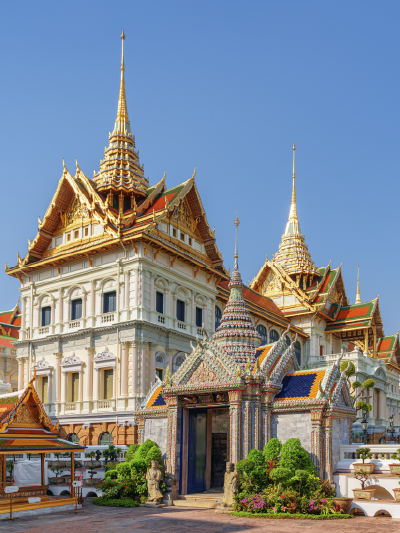
Thailand is best experienced through its variety. A journey may begin with the Grand Palace and Wat Arun in Bangkok, continue to the ancient ruins of Ayutthaya or Sukhothai, move north to Chiang Mai and Wat Phra That Doi Suthep, then shift toward Pattaya’s nearby beach leisure or the island scenery of Phuket, Krabi, Phi Phi, and Phang Nga Bay.
The destination suits those who enjoy culture, shopping, temples, beach stays, food, nightlife, soft adventure, and scenic relaxation. With the right pacing, Thailand can feel lively, colourful, and easy to enjoy across different styles of travel.