


Choosing a venue is one of the first major decisions in corporate event planning, but it should never be treated as a simple location choice. The venue affects how guests arrive, how the programme feels, how professionally the event is delivered, and how smoothly the day is remembered.
Whether for meetings, conferences, seminars, product launches, corporate dinners, incentive events, or other corporate events, the right venue does more than provide space. It creates the setting where planning, people, timing, and purpose come together.
Here are the key checks companies should make before booking a venue for a smooth corporate event.
Start with the Purpose of the Event
Before comparing venues, companies should be clear about what the event is meant to achieve. A leadership meeting may need privacy and focus, while a product launch may need visibility, brand presence, and a setting that feels energetic. A training session, conference, dinner, or incentive event will each require a different kind of environment.
This step helps companies avoid choosing a venue only because it looks impressive. The venue should support the event’s objective, tone, audience profile, and expected outcome. If the purpose is not clear from the beginning, even a beautiful venue can become the wrong choice once the event planning begins.
Check the Location from the Guest’s Point of View
A venue may look convenient on a map, but the real test is how easy it feels for guests to reach it. Companies should look at traffic patterns, parking access, drop-off areas, entrance clarity, and how simple it is for first-time visitors to find the event space.
This is especially important when the event includes senior guests, speakers, clients, or international attendees. A difficult arrival can affect the mood before the event even starts. The location should make the first step of the experience feel calm, clear, and well-managed.
Match the Capacity with the Event Format
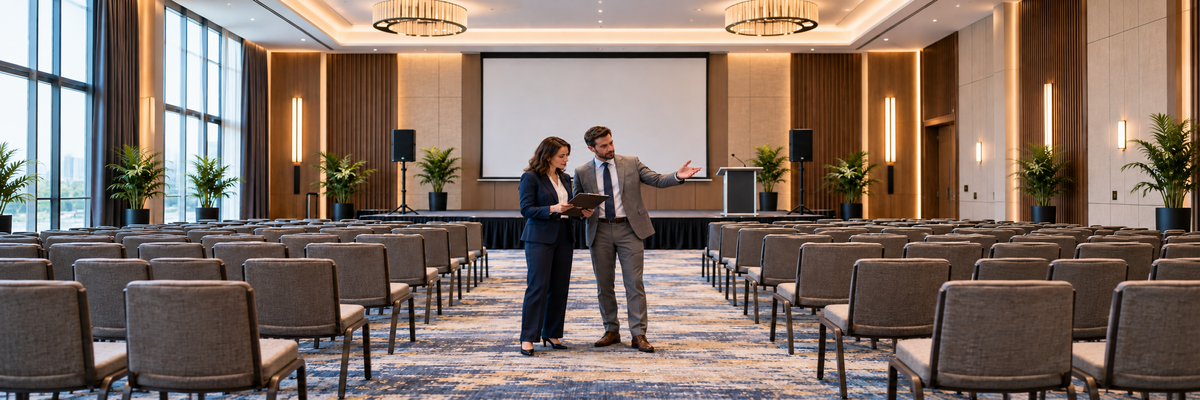
Venue capacity should be checked based on the actual event setup, not only the maximum number of people the space can hold. A hall that fits 200 guests in theatre style may not feel suitable for a banquet, classroom setup, boardroom discussion, or networking event.
The room should feel balanced for the expected attendance. Too little space can make the event uncomfortable, while too much space can reduce energy and make the gathering feel under-attended. The right capacity helps the event feel intentional, organised, and suitable for the format.
Assess the Technical Infrastructure
Corporate events often depend on technical readiness. Presentations, speeches, panel discussions, hybrid sessions, microphones, screens, sound systems, Wi-Fi, lighting, and power access should be tested or clearly confirmed before the venue is booked.
Companies should also ask whether technical support will be available during setup and throughout the event. Equipment alone is not enough. If a microphone fails, a presentation does not connect, or the internet becomes unstable, the venue team should be able to respond quickly without disrupting the programme.
Study the Internal Event Flow
A good venue should make the event journey feel natural once guests are inside. Registration, the main hall, breakout rooms, refreshment areas, dining spaces, restrooms, prayer rooms, and exits should be positioned in a way that supports the agenda.
This matters most for events with multiple sessions, coffee breaks, networking periods, or separate dining arrangements. If the venue layout creates bottlenecks, unclear directions, or long walking gaps between important areas, the event can lose time and energy even when the schedule is well planned.
Review Catering Beyond the Menu
Food and beverage arrangements should be judged by timing, service flow, and suitability, not only by the menu. A good menu can still create problems if coffee breaks are slow, buffet lines are crowded, or lunch service interrupts the event schedule.
Companies should check how the venue manages dietary requirements, service speed, refreshment placement, and meal timing. Catering should support the event experience quietly and smoothly, allowing guests to stay focused, comfortable, and engaged.
Confirm Branding and Setup Flexibility
Corporate events often need the venue to reflect the company or event identity. This may include welcome desks, stage backdrops, directional boards, product displays, banners, table branding, or other visual elements connected to the event theme.
Before confirming the venue, companies should ask what is allowed, where branding can be placed, and whether there are restrictions on installation, decoration, supplier access, or setup time. These details should be clarified early because branding limitations can affect the final look and feel of the event.
Understand the Full Cost Before Committing
Additional charges may apply for setup hours, overtime, technical equipment, cleaning, security, extra staff, parking, catering minimums, or penalties linked to cancellation and date changes.
A proper cost review helps companies compare venues more accurately. A venue with a lower rental fee may become more expensive once required services are added. Clear pricing protects the event budget and reduces the chance of last-minute financial surprises.
Prioritise Guest Comfort and On-Site Support
Guest comfort depends on details that are easy to overlook during a venue visit. Temperature control, acoustics, restroom access, prayer room availability, waiting areas, and staff responsiveness can all influence how guests experience the event.
For VIP guests, speakers, senior management, or international delegates, companies may also need private waiting areas, dedicated assistance, refreshments, or a more controlled welcome experience. These details help the event feel thoughtful, polished, and professionally managed.
Connect the Venue with Travel and Stay Requirements
For events involving guests from other cities or countries, venue selection should be connected to the wider travel plan. Flight timings, hotel options, airport transfers, local transportation, and departure schedules should be reviewed before the venue is confirmed.
This is particularly important for conferences, incentive events, corporate gatherings, and business events with regional or international participants. A venue that works well with nearby accommodation and transport arrangements can make the full experience easier to manage from arrival to departure.
Check Safety, Reliability, and Venue Support
Before booking, companies should review the venue’s safety and reliability standards. Emergency exits, crowd management, security support, fire safety procedures, accessibility provisions, and backup arrangements should be clearly understood.
The venue team’s experience is just as important. A reliable venue should be able to coordinate setup schedules, manage supplier access, handle timing changes, and respond to on-site requirements with clarity. For corporate events, dependable support can make the difference between a stressful event and a well-controlled one.
The Right Venue Makes the Event Easier to Deliver
A corporate event venue should not be chosen only because it looks impressive. It should be selected because it supports the purpose of the event and makes the full experience easier to deliver.
When companies check the right details before booking, they reduce avoidable issues and create a stronger foundation for the event. The result is a corporate gathering that feels organised, comfortable, professional, and smooth from the first arrival to the final departure.