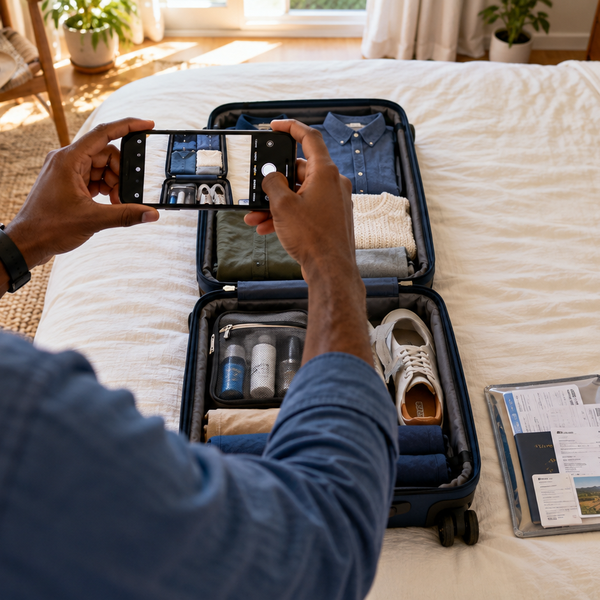



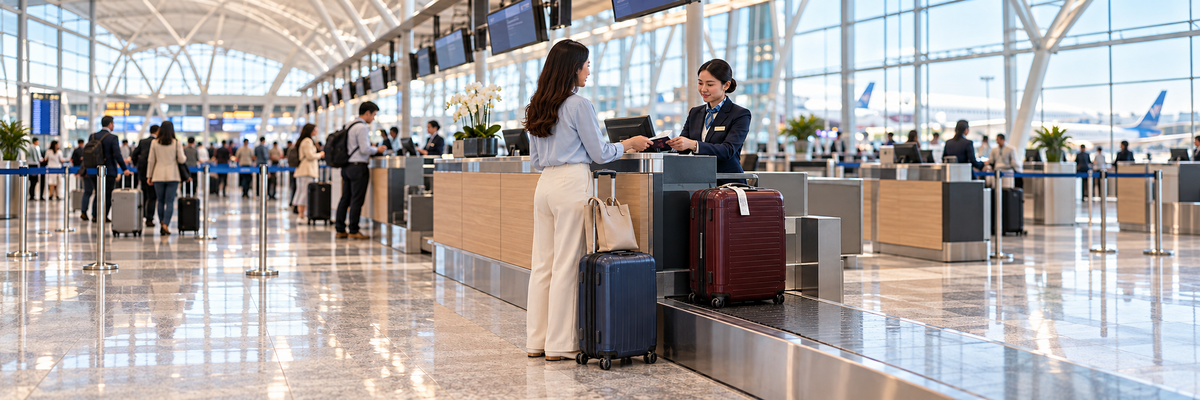
Packing for a flight becomes easier when the rule is clear: every item should go into the right bag. Some items can go in both carry-on and checked baggage, some should stay only in carry-on, some belong only in checked baggage, and some need airline approval before travel.
For travellers flying from Qatar, baggage rules are shaped by airline policy, airport security, international aviation safety rules, and destination country regulations. This guide gives a simple packing direction so travellers can prepare with more confidence before reaching the airport.
What Is Carry-On Baggage?
Carry-on baggage, also called cabin baggage or hand baggage, is the bag travellers take with them into the aircraft cabin.
It is meant for items needed during the journey, such as travel documents, money, electronics, medicine, valuables, and personal essentials.
What Is Checked Baggage?
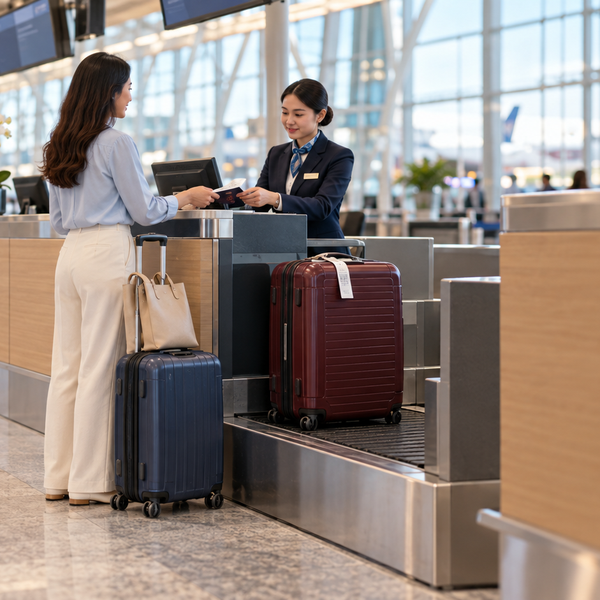
Checked baggage is the suitcase or bag handed over at the airline check-in counter.
It travels in the aircraft hold and is collected after arrival at the destination. Checked baggage is usually used for clothing, shoes, larger toiletries, and items not needed during the flight.
Items Allowed in Both Carry-On and Checked Baggage
The following items are generally suitable for both carry-on and checked baggage. Where conditions apply, the condition is mentioned with the item.
Clothes and Shoes
Accepted in both baggage types without special conditions.
Books and Personal Accessories
Accepted in both baggage types without special conditions.
Chargers and Cables
Accepted in both baggage types when they do not contain built-in lithium batteries. Chargers and cables needed during the journey are better kept in carry-on baggage.
Toiletries and Cosmetics
Accepted in both baggage types with liquid restrictions for carry-on baggage. Liquids, gels, creams, pastes, and aerosols in hand baggage should be in containers of 100 ml or less and packed in a clear resealable bag. Hamad International Airport also states that liquid, aerosol, and gel containers in hand baggage must be 100 ml or less, with the bag capacity not exceeding 1 litre.
Bottles larger than 100 ml should be packed in checked baggage, as long as the product itself is accepted by the airline and destination country.
Medicines
Accepted in both baggage types. Essential medicine should be kept in carry-on baggage so it remains available during the flight and immediately after arrival. For prescription, controlled, or special medication, travellers should carry supporting medical documents and check the destination country’s medicine rules before travel.
Baby Food and Baby Essentials
Accepted in reasonable quantities needed for the journey. These items should be packed clearly because airport security can ask to inspect them separately.
Packed Food Items
Dry and sealed food items are generally easier to carry. Fresh food, meat, dairy products, plants, seeds, and similar items should be checked against the destination country’s customs rules before travel.
Items Allowed Only in Carry-On Baggage
The following items should stay in hand baggage because they are important, valuable, battery-related, or not suitable for checked baggage.
Passport and Travel Documents
Keep passports, visas, boarding passes, travel insurance documents, and hotel or transfer details with the traveller at all times.
Cash, Bank Cards, Jewellery, and Valuables
Keep these in carry-on baggage for safety and easy access.
Essential Medication Needed During the Journey
Keep medicine needed during the flight or immediately after arrival in carry-on baggage.
Mobile Phones, Laptops, Tablets, Cameras, and Similar Electronics
Keep battery-powered electronic devices in carry-on baggage. IATA advises travellers to keep phones, laptops, cameras, vapes where allowed, and other battery-powered items in hand baggage rather than checked baggage.
Power Banks
Keep power banks in hand baggage and protect them from short circuits. Power banks up to 100 Wh are generally accepted in carry-on baggage. Power banks between 100 Wh and 160 Wh require airline approval. Power banks above 160 Wh are generally not accepted on passenger aircraft. Some airlines also limit the number of power banks each traveller can carry, so travellers carrying more than one should check the airline’s latest policy before packing.
Spare Lithium Batteries
Keep spare lithium batteries in hand baggage. Battery terminals should be protected by using original packaging, covering the terminals, or packing each battery separately in a protective pouch. IATA states that spare batteries and power banks should never be placed in checked baggage.
E-Cigarettes and Vapes
Carry only if accepted by the airline and destination country. When accepted, they belong in carry-on baggage and must not be used or charged during the flight. IATA notes that some airlines do not allow e-cigarettes or vapes at all, while others permit them only in carry-on baggage.
Items Allowed Only in Checked Baggage
The following items are not suitable for the aircraft cabin. Pack them in checked baggage, secured properly, and check airline rules when the item is sharp, heavy, oversized, or unusual.
Knives and Blades
Pack knives and blades in checked baggage. Sharp edges should be covered or secured properly to prevent injury during baggage handling.
Scissors and Sharp Grooming Tools
Pack scissors and sharp grooming tools in checked baggage. Hamad International Airport lists sharp items with blades longer than 6 cm among restricted hand baggage items.
Work Tools
Pack drills, saws, crowbars, hammers, and similar tools in checked baggage. Tools should be secured properly so they do not damage the bag or injure baggage handlers.
Sports Equipment
Pack golf clubs, baseball bats, martial arts equipment, hockey sticks, and similar sports items in checked baggage. These items are not suitable for the aircraft cabin and are handled according to airline baggage rules.
Large Liquid Bottles
Pack bottles larger than 100 ml in checked baggage. This applies to items such as shampoo, lotion, perfume, body wash, and similar liquids, as long as the product itself is accepted and within the airline’s quantity limits.
Full-Size Toiletries and Personal Care Items
Pack full-size toiletries, sprays, perfumes, and similar personal care items in checked baggage. Aerosols and liquids should be closed properly to avoid leakage.
Items Allowed Only With Special Permission
Some items can travel only when the airline approves them in advance or when specific legal and safety conditions are met. These should be checked before travel, not at the airport.
Firearms and Ammunition
Accepted only under strict legal and airline conditions, usually in checked baggage only. Sporting weapons must be unloaded and packed in a proper transport box, and ammunition is limited by weight and purpose. IATA advises checking with the airline to make the necessary arrangements before travel.
Medical Oxygen Cylinders
Carry only with airline approval. These items must meet the airline’s size, weight, and safety conditions.
Battery-Powered Mobility Aids
Carry with advance airline coordination. Travellers using battery-powered wheelchairs or mobility aids should provide the airline with battery type and handling details before travel. IATA highlights that different procedures apply depending on the battery type.
Certain Medical Devices
Battery-powered or oxygen-related medical devices should be checked with the airline before travel. This helps confirm whether approval, documents, or special handling are needed.
Dry Ice
Carry only within permitted quantity limits and with airline approval when required. Dry ice is usually connected to the transport of items that must remain cold, so packing and acceptance rules should be confirmed in advance.
Smart Luggage With Built-In Batteries
Accepted only when the battery can be removed. If the bag is checked in, the battery should be removed and carried in hand baggage. Smart bags with non-removable batteries can be refused.
Items Prohibited to Carry
The following items are generally prohibited in both carry-on and checked baggage.
Fireworks and Explosives
Includes fireworks, blasting caps, smoke canisters, and explosive materials.
Flammable Fuels and Lighter Refills
Includes gasoline, fuel, lighter refills, and similar flammable liquids.
Toxic Chemicals and Dangerous Substances
Includes poisonous, corrosive, or highly hazardous chemical substances.
Damaged or Defective Lithium Batteries
Includes swollen, leaking, punctured, recalled, or visibly damaged batteries. IATA advises travellers not to travel with swollen, punctured, or damaged batteries because they can be unstable and dangerous.
Pepper Spray and Disabling Devices
Includes pepper spray, tear gas, stun guns, and similar disabling items. IATA states that disabling devices of any kind are forbidden in both carry-on and checked baggage.
Dangerous Gases
Includes certain compressed gases and gas containers that are unsafe for passenger baggage.
Items Banned by the Destination Country
Includes restricted food, medicines, plants, seeds, tobacco products, alcohol-related items, or personal products depending on the country of arrival.
Before You Pack
Before closing the suitcase, travellers should check three things:
Airline baggage rules
Airport security requirements
Destination country restrictions
This is especially important for batteries, liquids, medicine, food items, sharp objects, sports equipment, electronic devices, and items that need approval.
Good packing helps the journey begin smoothly. When travellers know what belongs in carry-on baggage, what should go into checked baggage, what needs approval, and what should not be carried, the airport experience becomes easier and more comfortable.